Tarkona

Process Documentation

The Editorial Process. Documented.

Every entry published in Tarkona follows a structured development process — from source identification to qualified review to publication. This page describes that process in full.

Research documents and peer-reviewed nutritional journals spread across a clean wooden desk in a quiet South Jakarta editorial office, natural window light, documentary flat-lay photography

Editorial Research — Revision 07-C, June 2026

01

The Four Stages

From Source to Publication

01

Stage One

Source Identification & Evaluation

Peer-Reviewed Sources Source Cataloguing

Each entry topic begins with a structured search of published nutritional and exercise research. Sources are drawn from peer-reviewed journals indexed in recognised academic databases. Grey literature — blog posts, influencer citations, brand-sponsored content — is excluded at this stage regardless of how widely it circulates in popular wellness media.

Sources are catalogued against a relevance matrix that considers: publication date (preference for research published within the preceding eight years), sample population (preference for studies that include Asian or Southeast Asian participants), and methodological rigour (controlled study designs given greater weight than observational or self-reported data).

A minimum of three independently published sources is required before an entry topic progresses to the drafting stage. Topics supported by a single source, however prominent, are held until corroborating research becomes available.

02

Stage Two

Local Contextualisation

Jakarta Context Practical Adaptation

Research findings are reviewed for practical applicability within the Indonesian context. This stage addresses the gap that exists when guidance produced for temperate climates, Western food cultures, or different working patterns is applied without adjustment to professional men in Jakarta.

Adaptations made at this stage are documented and disclosed in the published entry. If a nutritional framework assumes access to seasonal produce unavailable in Indonesian markets, the entry notes the substitution. If an exercise protocol assumes access to facilities that are uncommon in the city's commercial gym landscape, alternatives are provided.

The editorial researcher responsible for this stage maintains a running log of adaptation decisions, which forms part of the entry's internal documentation. Readers can request access to this log for any entry by contacting the editorial office.

03

Stage Three

Qualified Nutrition Review

Professional Oversight Independent Review

All content that includes nutritional guidance, dietary frameworks, or supplement information is reviewed by a qualified nutrition professional before publication. This reviewer operates independently of the editorial team and has the authority to request revisions, require additional sourcing, or recommend that content be withheld pending further research.

The review process is not a sign-off formality. Reviewers are expected to flag — and the editorial team is expected to address — any instance where the published guidance could reasonably be misread as endorsing a nutritional approach that is not adequately supported by the cited research. Editorial commentary is clearly marked as such and is not subject to the same review process as guidance content.

We recommend speaking with a qualified wellness or nutrition professional before introducing any supplement to your daily routine, particularly if you have specific dietary requirements.

04

Stage Four

Publication & Version Control

Dated Entries Transparent Revision

Entries are published with full dating — volume, issue, and publication date. Any subsequent revision to a published entry is noted inline with a revision date and a brief description of what changed and why. Tarkona does not silently update content; all changes are disclosed.

Entries are not removed from the archive unless they contain guidance that has been directly contradicted by subsequent research. In such cases, the original entry is preserved with a clearly marked notice explaining the update and linking to the revised guidance. The archive is considered a document of the journal's position at each point in time, not a curated collection of currently approved recommendations only.

Each published entry carries a reference list of all cited sources. Readers who wish to consult primary sources directly are encouraged to do so. The editorial team is available to assist in accessing specific research papers.

02

Quality Standards

What Tarkona Does Not Publish

Rapid-Result Frameworks

Tarkona does not publish guidance that promises measurable change within days or weeks. The journal's editorial position is that sustainable improvement in daily wellness occurs across months and years, not over short cycles.

Unsourced Supplement Guidance

Any reference to nutritional supplementation in Tarkona must be accompanied by cited published research. Supplement guidance without independent batch verification or sourced documentation is not published. Ingredient profiles are selected based on published nutritional research and undergo independent batch verification for quality and labelling accuracy.

Advertiser-Influenced Content

Tarkona carries no advertising and has no commercial relationships with any brand in the wellness, fitness, or food sectors. No content on this site is sponsored, commissioned, or influenced by a commercial entity. This independence is considered non-negotiable by the editorial team.

Context-Free Global Guidance

Wellness guidance that has not been reviewed for relevance to Indonesian men and their specific context is not published without adaptation. If an adaptation cannot be made responsibly, the topic is deferred until locally applicable guidance can be developed.

03

Ingredient Standards

Sourcing & Verification

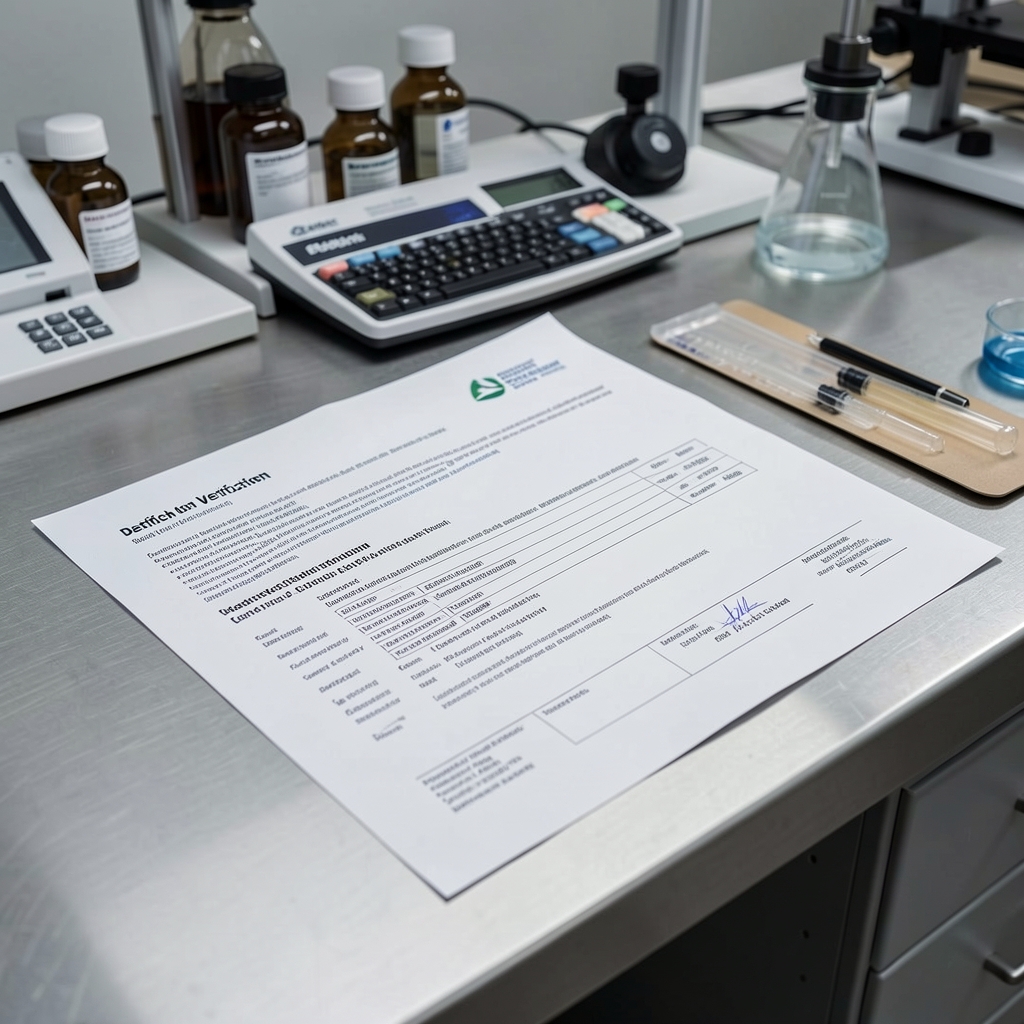
Close-up of batch verification documents and ingredient certificate of composition on a quality-control bench, under controlled studio lighting, editorial documentation photography

Batch Documentation — Q2 2026

Active ingredients referenced in Tarkona content are sourced from documented suppliers, with each batch accompanied by a certificate of composition. Sourcing prioritises suppliers whose facilities maintain food-grade processing standards.

Where Tarkona references specific ingredients in its nutritional guidance, the ingredient profiles are selected based on published nutritional research. The journal does not endorse specific brands or commercial products. References to ingredient categories — zinc, magnesium, vitamin D3 and similar — are made in the context of published nutritional roles, not as endorsements of specific commercial formulations.

Safe role descriptions used in Tarkona's published guidance:

Zinc

Supports normal cognitive function and immune health

Magnesium

Contributes to normal energy metabolism and reduces tiredness

Vitamin D3

Supports normal function of the immune system

Vitamin B12

Contributes to normal energy production

Vitamin C

Supports the normal function of the immune system

Selenium

Contributes to protection of cells from oxidative stress

04

Important Notice

Editorial Disclosure

Journal Classification

Tarkona is an independent wellness resource focused on everyday nutrition and active lifestyle practices for men. The content is not affiliated with any governmental or institutional body.

Professional Consultation

We recommend speaking with a qualified wellness or nutrition professional before introducing any supplement to your daily routine, particularly if you have specific dietary requirements.

Research Basis

Ingredient profiles referenced in Tarkona content are selected based on published nutritional research and undergo independent batch verification for quality and labelling accuracy.

Ingredient Sourcing

Active ingredients are sourced from documented suppliers, with each batch accompanied by a certificate of composition. Sourcing prioritises suppliers whose facilities maintain food-grade processing standards.

05

Questions

Methodology FAQ

Common questions about how Tarkona develops and reviews its published guidance.

Topics are selected based on their relevance to Indonesian professional men, the availability of adequate published research, and the gap between existing guidance and the specific needs of this readership. Reader correspondence and editorial observation both inform the topic pipeline.

Yes. Each published entry carries an inline reference list. The full internal documentation — including the source evaluation matrix and the adaptation log — is available on request from the editorial office at [email protected].

From topic selection to publication, an entry typically requires six to ten weeks. The qualified nutrition review stage accounts for two to three weeks of this, depending on the complexity of the guidance. Entries are not published to a deadline — the process completes when the review is satisfied, not when the calendar requires.

The editorial team reviews published entries on a rolling basis as new research emerges. When an entry requires updating, a revision notice is added inline with the date and a description of the change. The original version is preserved in the archive. Entries that require full withdrawal are retained with a clear notice explaining why the guidance is no longer current.

When peer-reviewed sources disagree, the entry documents the disagreement explicitly rather than selecting the position most convenient to the guidance being developed. Where consensus does not exist, Tarkona publishes the range of documented positions and notes the limitations of current research. We do not construct false consensus.

The Journal

See the methodology in practice.

Browse the published guidance that this process produces.

Browse Guidance